 width="240" height="180"
posted by Woody Pase at 2:41 AM
0 comments

Thursday, November 09, 2006
CYBORGASM!: The Ecstatic Fusion of Flesh and Machine
This isn't really a blog entry. It's more of a title for an awesome five minute presentation that I will not be doing. In class.
Nonetheless, your comments are encouraged.
Nonetheless, your comments are encouraged.
posted by Woody Pase at 2:11 AM
0 comments
Cyborg Manifesto Detesto
I'm pretty sure I've had about all I can stand of Donna Haraway. Which is unfortunate, because I'm also pretty sure that I agree with her on cyborgism.
The perspective that the cyborg age is already happening is not foreign to me. As an avid reader of science fiction for most of my life, I feel that I've been prepared for this scenario for years. I see her points regarding the cyborg as the destroyer of the human/machine hierarchy. I see it everywhere. I see it when I think about how staplers used to look; heavy, metallic clunky things that made a lot of noise and were indispensable to a bureaucracy. Now they are these sleek, lightweight ergonomic devices, integrated into our body's design so as to minimize carpal tunnel syndrome, that function with smoothness and silence in fastening together paper, a material that, ironically, we will need less of as we press on into the cyborg/perfect stapler age.
What I find irksome is that her ideas only become lucid when expressed through interpreters, such as an interviewer, or an article about her. She is her own kind of cyborg: she is an academic fused with the technology of postmodern rhetoric. She is like The Terminator, except the The Terminator is not above presenting it's thesis in an accessible manner.
I'm no apologist for capitalism, and I do think that I agree with many of the points around which she performs her intellectual Mummenschanz, but is this lobbing of snowballs from a left-wing academic ivory tower at "phallogocentric culture" doing any good for the single mom with gender identity issues and two kids to feed? I have my doubts.
Also, I think she was remiss in not including Frank Herbert, Theodore Sturgeon, and Phillip Jose Farmer in her list of SF authors that explore gender boundaries in their fiction. But whatever.
I realize how glib all this must sound, but it is just my honest, gut reaction to the reading. I need to share it with someone, and it makes a lot more sense to do it here than to call my friends who haven't been assigned this reading and ruining their evening with my ranting. Thank you.
The perspective that the cyborg age is already happening is not foreign to me. As an avid reader of science fiction for most of my life, I feel that I've been prepared for this scenario for years. I see her points regarding the cyborg as the destroyer of the human/machine hierarchy. I see it everywhere. I see it when I think about how staplers used to look; heavy, metallic clunky things that made a lot of noise and were indispensable to a bureaucracy. Now they are these sleek, lightweight ergonomic devices, integrated into our body's design so as to minimize carpal tunnel syndrome, that function with smoothness and silence in fastening together paper, a material that, ironically, we will need less of as we press on into the cyborg/perfect stapler age.
What I find irksome is that her ideas only become lucid when expressed through interpreters, such as an interviewer, or an article about her. She is her own kind of cyborg: she is an academic fused with the technology of postmodern rhetoric. She is like The Terminator, except the The Terminator is not above presenting it's thesis in an accessible manner.
I'm no apologist for capitalism, and I do think that I agree with many of the points around which she performs her intellectual Mummenschanz, but is this lobbing of snowballs from a left-wing academic ivory tower at "phallogocentric culture" doing any good for the single mom with gender identity issues and two kids to feed? I have my doubts.
Also, I think she was remiss in not including Frank Herbert, Theodore Sturgeon, and Phillip Jose Farmer in her list of SF authors that explore gender boundaries in their fiction. But whatever.
I realize how glib all this must sound, but it is just my honest, gut reaction to the reading. I need to share it with someone, and it makes a lot more sense to do it here than to call my friends who haven't been assigned this reading and ruining their evening with my ranting. Thank you.
posted by Woody Pase at 12:55 AM
0 comments

I am not convinced that Ms. Wildenstein is totally tragic. Perhaps what motivated her to pursue this dream; infidelity; is sad, but her specifically; I don't know. She has the money and the resources to do it. I'm sure it makes her at least as happy as the last $25 tee shirt that I bought. No one has been hurt by it. She has provided reactionary people with something to scornfully laugh at. And honestly, I find her intriguing, in a polymorphously perverse sense.
This is relevant to cyborgs. Trust me.
posted by Woody Pase at 12:36 AM
0 comments
Friday, November 03, 2006
Cyborgs in the Military
The military is beginning to incorporate cyborgs in combat.
Links
BBC insect cyborg
Live Science shark cyborg
Robotics Trends monkey cyborg
monkey
http://www.youtube.com/watch?v=TK1WBA9Xl3c
Links
BBC insect cyborg
Live Science shark cyborg
Robotics Trends monkey cyborg
monkey
http://www.youtube.com/watch?v=TK1WBA9Xl3c
posted by sean maxwell at 1:18 PM
0 comments
Wednesday, October 18, 2006
Cyborg 1.0
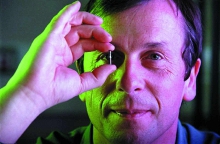
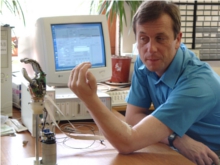
This article discusses experiments going on in England right now at the University of Reading. He as already experiment with a chip implanted in his arm which monitored his movement and performed tasks such as opening doors, turning on lights, and greeting him as he entered buildings.
He is now beginning more in-depth experiments by implanting more chips into his arms which will monitor and interact with his hand and arm movement. The pieces are encased in glass and communicate with computers via radio wave signals.
If this proves to be successful, he hopes to expand the experiment with implants in his wife.
The goal of this new experiment is to allow his hand and arm movements through programmed commands to interact with a computer and accomplish certain tasks. Therefore making life more efficient and easy.
pictures
1 2 3 4
links
kevinwarwick.com
cyborg 2.0
I, Cyborg
photo gallery
"Overriding everything, at the expense of a normal life, is Kevin's all encompassing scientific quest and desire to be a Cyborg."
He is now beginning more in-depth experiments by implanting more chips into his arms which will monitor and interact with his hand and arm movement. The pieces are encased in glass and communicate with computers via radio wave signals.
If this proves to be successful, he hopes to expand the experiment with implants in his wife.
The goal of this new experiment is to allow his hand and arm movements through programmed commands to interact with a computer and accomplish certain tasks. Therefore making life more efficient and easy.
pictures
1 2 3 4
links
kevinwarwick.com
cyborg 2.0
I, Cyborg
photo gallery
"Overriding everything, at the expense of a normal life, is Kevin's all encompassing scientific quest and desire to be a Cyborg."
posted by sean maxwell at 11:18 AM
0 comments



Thursday, October 12, 2006
discuss robot desire to be human and vice versa in depth.
posted by sean maxwell at 12:42 PM
0 comments
Friday, September 22, 2006
A prayer for cyborgs...
People-
When I was a child I prayed to God for a cyborg world, while hoping that Ronnie Reagan would not deliver nuclear destruction. I was scared.
-wp
When I was a child I prayed to God for a cyborg world, while hoping that Ronnie Reagan would not deliver nuclear destruction. I was scared.
-wp
posted by Woody Pase at 4:07 AM
0 comments
Contributors
Links
- Media & Performance
- Evolving Tools/The Politics of Production
- Utopia/Dystopia
- Locative Media
- Software Art
- The Cyborg
- Digital Cinema
- Wearables and Trackables
- Technology, Control, Surveillance Activism
- Gaming and Interaction Design
- Google News
- Edit-Me
- Edit-Me
Previous Posts
- width="240" height="180"alt="Worker Optimized for ...
- CYBORGASM!: The Ecstatic Fusion of Flesh and Machine
- A Fascinating Article About Transhumanism
- Cyborg Manifesto Detesto
- I am not convinced that Ms. Wildenstein is totally...
- Cyborgs in the Military
- Cyborg 1.0
- Cyborg name decoder
- discuss robot desire to be human and vice versa in...
- A prayer for cyborgs...
Archives
